

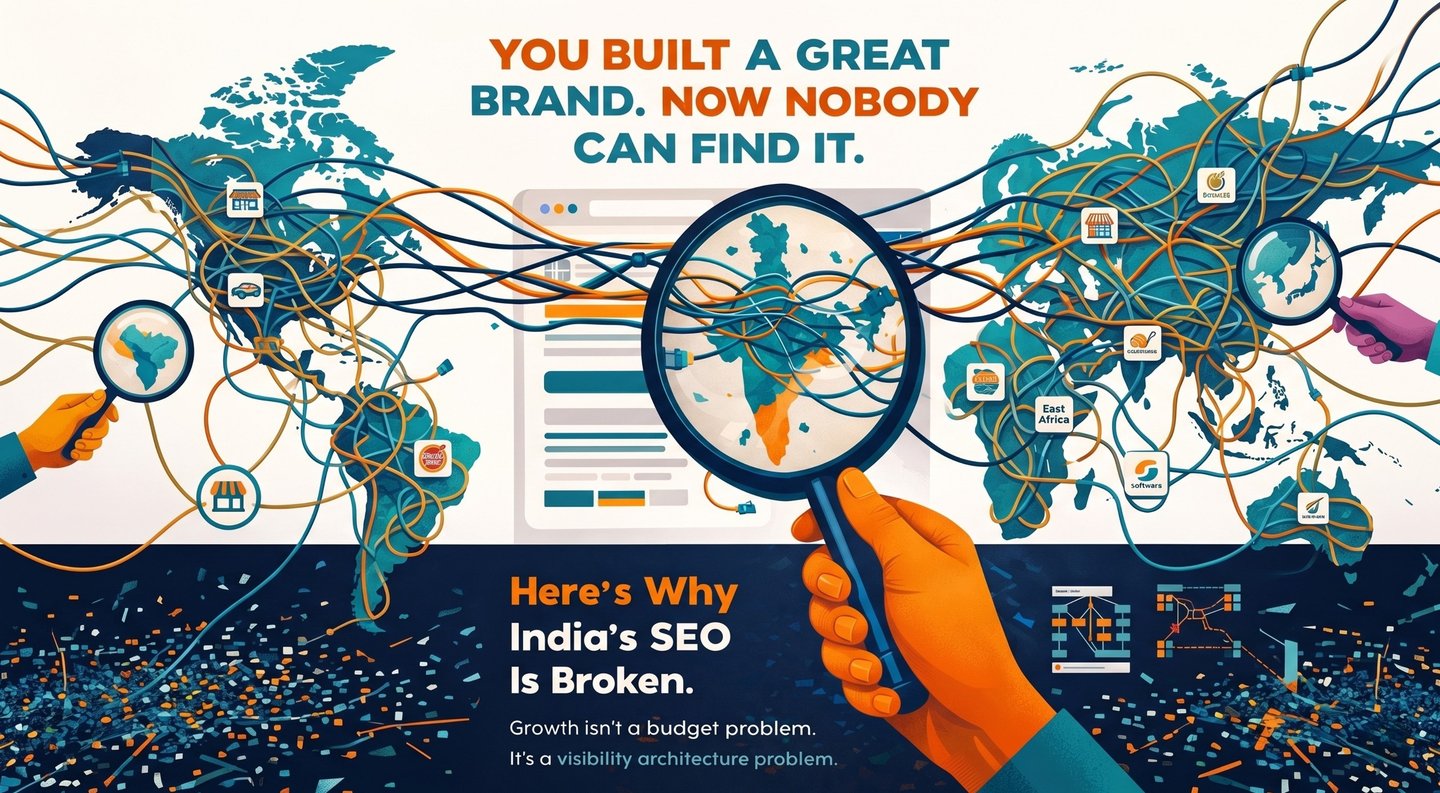
You Built a Great Brand. Now Nobody Can Find It. Here's Why India's SEO Is Broken.
DIGITAL
Growth isn't a budget problem. It's a visibility architecture problem.
Congratulations on your brand. The logo is beautiful. The Instagram grid is a work of art. The founder has given two podcast interviews and used the phrase "building in public" at least seven times. The product is genuinely good. And if you search for it on Google — the actual name of your brand, spelled correctly, in English — it appears on page two, below a Quora thread from 2019 and a competitor's paid ad.
This is not bad luck. This is a predictable outcome of a very common decision: treating SEO as something you do after the brand is built, like painting a house after the roof has leaked through it for three years.
India has a particularly acute version of this problem. The startup ecosystem here has developed an extraordinary talent for building brands that are visible to investors, visible to journalists, visible to other founders at networking events — and almost entirely invisible to the actual customer who is sitting at home typing something into a search bar right now, looking for exactly what you make.
"Your brand has 200K followers and zero search presence. You built an audience. You forgot to build a business."
Here is the uncomfortable truth about search in India: it is not one market. It is seven or eight markets pretending to be one, speaking different languages, using different devices, searching at different times of day with different levels of intent. The person searching "best kurta under 1000" in Chennai is not the same person as the one searching "handloom cotton kurta" in Delhi. They are both your potential customer. Your SEO strategy is reaching neither of them.
The specific failure modes are worth naming, because founders keep making the same ones and agencies keep not telling them. The first is English-only architecture. India has 530 million internet users who primarily browse in languages other than English. Your website is in English. Your meta descriptions are in English. You have built a digital storefront with a sign that roughly half your potential customers cannot read.
The second is content that exists to exist. The blog was someone's idea at a strategy meeting. It was populated with posts titled "Top 10 Reasons to Buy Handloom Sarees." These posts contain keywords in the way that a scarecrow contains a person — the shape is vaguely right but nothing is home.
93% of online experiences begin with a search engine. Your Instagram ad interrupts someone else's experience. Search is where intent lives.
The third failure is technical debt nobody talks about. Page speed on mobile. Broken internal links. Images without alt text. Schema markup that was never implemented. These are not glamorous problems. They do not make good LinkedIn posts. But they are the reason your beautifully designed website is being quietly penalised by an algorithm that doesn't care how good the photography is.
The fix is not a bigger budget. It is a different orientation. SEO is not a campaign. It is infrastructure — the plumbing of your digital presence. The brands that dominate search in India built their visibility deliberately, early, and with the understanding that compounding works in content the same way it works in finance. The article published three years ago is still ranking. The keyword research done before the website launched is still paying dividends.
Organic search is the only marketing channel that gets better while you sleep. Everything else bills by the hour.
Who Am I?
SEO architecture, content strategy, and digital visibility are the exact problems The Editor solves for Indian brands. If your brand is invisible to the people who need it, that's a fixable problem — and it starts with a conversation about what "visible" actually means for your category.
Don't miss out on exclusive behind-the-scenes access, early demos, live streams and other benefits by subscribing to our newsletter.
Subscribe



+91 987 111 3110
pratik@unbranding.in
We are an AI Creative Agency, specialising in AI Advertising.
A Digihive Technology Pvt Ltd. Venture