
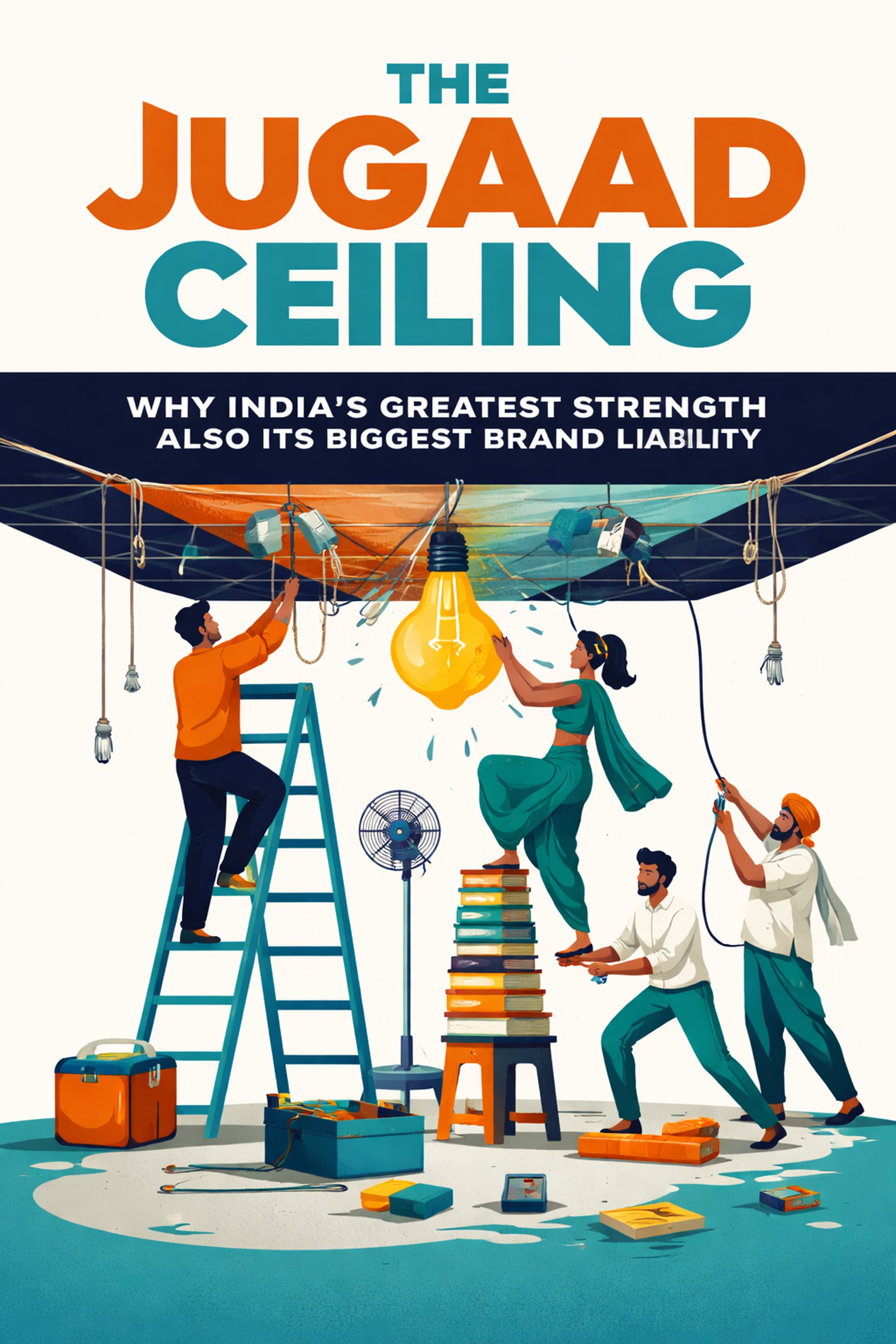
The Jugaad Ceiling: Why India's Greatest Strength Is Also Its Biggest Brand Liability
BUSINESS
Frugal innovation built a nation. It might be killing your premium brand.
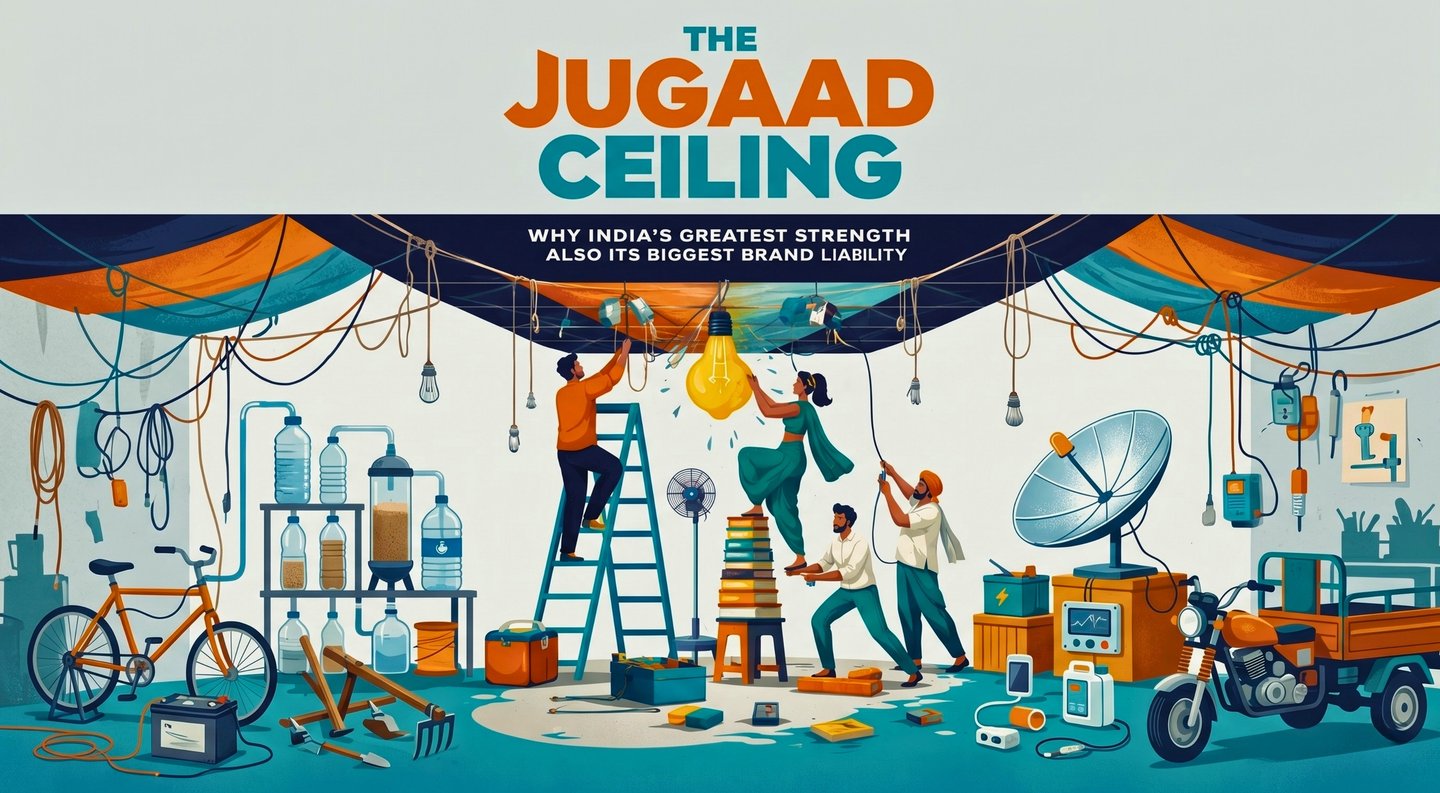
There is a word that India invented, the world borrowed, and consultants turned into a TED Talk. Jugaad. The art of doing more with less. The motorcycle engine repurposed as a water pump. The fridge made from clay pots. The business school case study that made Western executives feel bad about their R&D budgets for approximately fifteen minutes before they went back to spending them.
India loves jugaad. India is jugaad. And that is precisely the problem.
When your entire national identity is built around the elegant workaround, you create a culture that is extraordinarily good at solving problems on a budget and extraordinarily bad at convincing anyone to pay full price. You train a billion people to find the cheaper option. Then you try to launch a premium brand and wonder why nobody believes the number on the price tag.
"Jugaad is a survival strategy dressed up as an innovation philosophy. And survival strategies make terrible brand promises."
Here is the thing nobody says at the jugaad conference: frugal innovation is a response to scarcity. It is brilliant, it is admirable, and it is deeply contextual. The Jaipur Foot is a marvel of engineering that changed millions of lives. It is also a product that emerged because the people who needed it couldn't afford anything else. That context matters. You cannot extract the ingenuity from the constraint and pretend the constraint wasn't the whole point.
But India tried. India took jugaad — a philosophy born from necessity — and decided it was a competitive advantage to be exported. And in some cases it was. Affordable innovation is real. Frugal engineering has genuine value. The problem is what happens when jugaad becomes the ceiling instead of the floor.
Walk into a pitch meeting for an Indian brand and count how many times someone says "value for money." Not "value." Not "quality." Value for money. As if the highest aspiration a product can have is to be a good deal. As if the customer's primary emotion upon purchase should be relief that they didn't pay more.
This is jugaad psychology operating at the brand level. And it is a trap. Because the moment you position yourself as good value, you have entered a race that only one brand wins — the cheapest one. Everyone else is just an expensive version of the cheapest one. That is not a brand. That is a waiting room.
₹0 The premium a "value for money" brand can charge. By definition. The trap is built into the phrase.
The irony is that India is full of products and crafts that deserve premium positioning and could sustain it. Handwoven textiles that took three weeks to make. Leather goods assembled by artisans who learned from their grandparents. Spices grown in specific microclimates that cannot be replicated anywhere else on earth. These are not jugaad products. These are extraordinary products that have been jugaad-priced because nobody trusted the market to recognise their value.
The jugaad ceiling is not a market condition. It is a belief system. And belief systems can be changed, but only by brands with the nerve to try. The few Indian brands that have broken through did it by refusing the frame. They did not argue that they were good value. They argued that they were irreplaceable. That is a harder argument. It requires proof. It requires consistency. It requires a brand team that is not secretly embarrassed about the price.
Jugaad got India here. Which is remarkable, genuinely. But the tools that built the foundation are not always the tools that build the floors above it. At some point, the workaround has to give way to the intention. The ceiling is only as real as the people who believe in it. Start disbelieving.
Who Am I?
This article is written by a growth strategist, digital marketing architect, and brand positioning obsessive who has spent years building visibility and revenue for Indian brands across categories. If your brand has a jugaad ceiling — or any ceiling — that's exactly the kind of problem worth solving together.
Don't miss out on exclusive behind-the-scenes access, early demos, live streams and other benefits by subscribing to our newsletter.
Subscribe



+91 987 111 3110
pratik@unbranding.in
We are an AI Creative Agency, specialising in AI Advertising.
A Digihive Technology Pvt Ltd. Venture